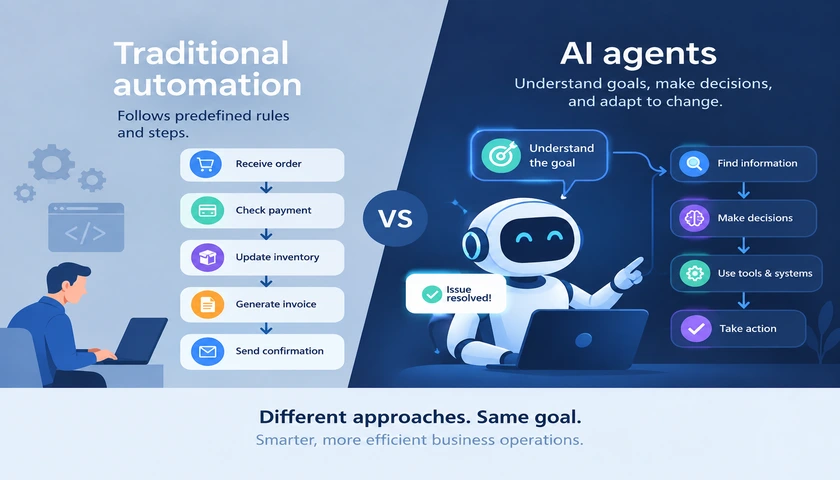
Generative AI is rapidly changing how modern enterprise software is designed, developed, and managed. What started as AI-powered content generation has now expanded into software engineering, automation, analytics, customer experiences, and enterprise operations.
Businesses across industries are exploring how generative AI can improve productivity, reduce development time, automate repetitive tasks, and support faster digital transformation.
As enterprise systems become more complex, organizations are increasingly using generative AI to build smarter, scalable, and more efficient software solutions.
In this blog, we will explore how generative AI is transforming enterprise software development and why businesses are investing heavily in AI-powered technologies.
What is generative AI?
Generative AI refers to artificial intelligence systems that can generate content, code, data insights, workflows, and responses based on user input and training data.
Unlike traditional automation systems, generative AI can create new outputs dynamically instead of only following predefined rules.
Generative AI technologies are now being used for:
- Code generation
- AI chatbots and assistants
- Workflow automation
- Document processing
- Business analytics
- Content generation
- Customer support systems
Modern enterprise software increasingly integrates generative AI capabilities to improve efficiency and decision-making.
Why enterprises are adopting generative AI
Businesses are adopting generative AI because it helps improve:
- Development speed
- Operational efficiency
- Customer experiences
- Productivity
- Data analysis
- Automation capabilities
Generative AI also allows organizations to reduce repetitive manual work while enabling teams to focus on strategic and high-value tasks.
As AI technologies continue advancing, enterprises are integrating generative AI into both customer-facing and internal business applications.
1. Faster software development and coding
One of the biggest impacts of generative AI is in software development itself.
AI-powered coding tools can help developers:
- Generate code snippets
- Suggest functions and logic
- Detect errors faster
- Automate repetitive coding tasks
- Improve debugging processes
This helps development teams reduce coding time and improve productivity.
Generative AI also supports faster prototyping and accelerates application development cycles.
2. Intelligent automation of business workflows
Generative AI is helping businesses automate complex workflows that previously required significant manual effort.
AI-powered enterprise systems can automate:
- Report generation
- Data processing
- Customer communication
- Internal approvals
- Document analysis
- Workflow management
This improves operational efficiency while reducing delays and human errors.
Modern enterprise platforms increasingly combine automation with AI-driven decision-making capabilities.
3. Enhanced customer support experiences
Many enterprises are integrating generative AI into customer support systems through AI chatbots and virtual assistants.
AI-powered support tools can:
- Respond to customer queries instantly
- Provide personalized recommendations
- Handle large volumes of conversations
- Offer 24/7 assistance
- Reduce support workloads
Advanced AI systems can also understand context better and provide more human-like interactions.
This helps businesses improve customer experiences while reducing operational costs.
4. Smarter enterprise data analysis
Enterprise systems generate massive amounts of business data every day.
Generative AI can analyze large datasets and generate:
- Business insights
- Performance summaries
- Predictive analytics
- Trend reports
- Operational recommendations
This allows businesses to make faster and more informed decisions based on real-time data analysis.
AI-driven analytics also improve strategic planning and operational visibility.
5. Personalized enterprise applications
Modern enterprise software is becoming more personalized and adaptive.
Generative AI helps applications deliver:
- Personalized dashboards
- Smart recommendations
- Dynamic workflows
- User-specific insights
- Intelligent search experiences
Personalization improves usability, productivity, and customer engagement across enterprise platforms.
6. Improved knowledge management
Large organizations often struggle to manage internal documentation, knowledge sharing, and information retrieval.
Generative AI can help employees:
- Search internal documents quickly
- Generate summaries
- Access relevant information faster
- Automate documentation workflows
AI-powered knowledge systems improve collaboration and reduce time spent searching for information.
7. Support for low-code and no-code development
Generative AI is also supporting the growth of low-code and no-code platforms.
AI-powered development tools can help non-technical users:
- Build workflows visually
- Generate application logic
- Automate business processes
- Create reports and dashboards
This allows businesses to accelerate internal software development and reduce dependency on large development teams for basic workflows.
8. Better scalability for enterprise systems
As businesses grow, enterprise software must handle larger datasets, increasing users, and more complex operations.
Generative AI helps improve scalability by automating tasks, optimizing workflows, and improving resource management.
Cloud-based AI systems also allow businesses to scale enterprise applications more efficiently without major infrastructure limitations.
9. Challenges businesses must manage
While generative AI offers many advantages, enterprises must also address important challenges such as:
- Data privacy and security
- AI accuracy and reliability
- Compliance requirements
- Ethical AI usage
- Integration complexity
- Human oversight and governance
Businesses should implement proper AI governance frameworks and security practices to ensure responsible AI adoption.
Building the future of enterprise software with AI
Generative AI is transforming enterprise software development by improving automation, productivity, personalization, and business intelligence.
From faster coding and intelligent workflows to AI-powered analytics and customer support, businesses are increasingly integrating generative AI into modern enterprise platforms.
As AI technologies continue evolving, enterprises that adopt scalable and secure AI-driven software strategies will be better positioned for innovation, operational efficiency, and long-term digital growth.
FAQs
What is generative AI in enterprise software development?
Generative AI refers to AI systems that can generate code, content, workflows, insights, and intelligent responses to improve enterprise software functionality and automation.
How does generative AI help software developers?
Generative AI helps developers by automating repetitive coding tasks, suggesting code improvements, improving debugging, and accelerating development processes.
Can generative AI improve customer support systems?
Yes, generative AI powers chatbots and virtual assistants that provide faster, personalized, and automated customer support experiences.
What are the benefits of generative AI for enterprises?
Key benefits include improved productivity, automation, faster development, smarter analytics, personalization, and operational efficiency.
What challenges should businesses consider before adopting generative AI?
Businesses should consider data security, compliance, AI accuracy, governance, ethical concerns, and integration complexity during AI implementation.