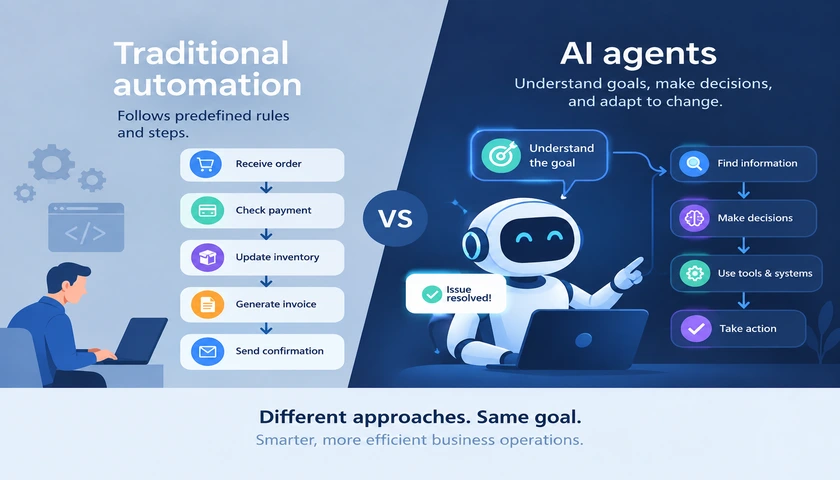
Artificial Intelligence (AI) is transforming how businesses operate across industries. From automation and predictive analytics to customer support and intelligent decision-making, AI is helping enterprises improve efficiency, reduce operational costs, and deliver better customer experiences.
However, building AI solutions internally is not always easy. Many organizations face challenges such as limited in-house expertise, high development costs, infrastructure requirements, and difficulties in scaling AI projects successfully.
This is why many enterprises choose to outsource AI development to specialized technology partners. The right outsourcing partner can help businesses accelerate AI adoption, reduce implementation risks, and build scalable AI-powered solutions aligned with long-term business goals.
But selecting the right AI outsourcing partner requires careful planning. A wrong decision can lead to delays, budget overruns, security concerns, and failed implementation.
In this blog, we will explore the key factors enterprises should consider when choosing an AI outsourcing partner.
Why Enterprises Are Outsourcing AI Development
AI projects require expertise in multiple areas, including:
- Machine Learning (ML)
- Natural Language Processing (NLP)
- Data Engineering
- Cloud Infrastructure
- Automation
- API Integrations
- AI Model Training and Deployment
Building and managing all these capabilities internally can be time-consuming and expensive.
Outsourcing allows enterprises to access experienced AI professionals, modern technologies, and scalable development resources without building large in-house teams from scratch.
1. Evaluate Technical Expertise and AI Experience
One of the first things enterprises should consider is the technical expertise of the outsourcing partner.
AI development involves complex technologies, frameworks, and data processing workflows. The partner should have hands-on experience in building real-world AI applications and enterprise-grade solutions.
Look for expertise in areas such as:
- Machine Learning and Deep Learning
- Generative AI solutions
- Chatbots and virtual assistants
- Predictive analytics
- Computer vision
- Cloud AI platforms
- Data management and analytics
Reviewing previous projects, case studies, and technology stacks can help evaluate their experience level.
2. Check Industry Understanding
AI solutions should align with business operations and industry-specific requirements.
An outsourcing partner with experience in your industry will better understand compliance requirements, workflows, operational challenges, and customer expectations.
For example:
- Healthcare businesses may require HIPAA-compliant AI solutions
- Financial organizations may focus on fraud detection and data security
- Retail businesses may need recommendation engines and customer analytics
Industry knowledge helps improve implementation quality and reduces project risks.
3. Focus on Scalability and Long-Term Support
Many AI projects start small but expand over time.
Enterprises should choose outsourcing partners capable of building scalable AI architectures that support future growth, larger datasets, and increasing user demands.
Long-term support is equally important. AI systems require:
- Continuous monitoring
- Model optimization
- Performance improvements
- Security updates
- Retraining and maintenance
A reliable outsourcing partner should provide ongoing support even after deployment.
4. Evaluate Data Security and Compliance Practices
AI systems process large amounts of business and customer data, making security a critical factor.
Before selecting an outsourcing partner, enterprises should evaluate their:
- Data protection policies
- Access control practices
- Compliance standards
- Cloud security measures
- Backup and disaster recovery processes
The partner should follow strong cybersecurity practices and ensure compliance with industry regulations and data privacy requirements.
5. Review Communication and Project Management Approach
Poor communication is one of the most common reasons outsourcing projects fail.
A good AI outsourcing partner should maintain transparent communication throughout the project lifecycle. This includes:
- Regular progress updates
- Clear timelines and milestones
- Agile development processes
- Dedicated project management
- Collaboration tools and reporting
Strong communication helps reduce misunderstandings and keeps projects aligned with business goals.
6. Understand Their AI Development Process
Enterprises should also understand how the outsourcing partner approaches AI development.
A structured development process usually includes:
- Requirement analysis
- Data collection and preparation
- Model development and training
- Testing and validation
- Deployment and integration
- Monitoring and optimization
A well-defined process improves project efficiency and reduces implementation risks.
7. Consider Cost vs Value
Choosing the lowest-cost outsourcing provider may lead to poor implementation quality and higher long-term expenses.
Instead of focusing only on pricing, enterprises should evaluate the overall value offered by the partner, including:
- Technical expertise
- Scalability
- Security standards
- Delivery timelines
- Post-launch support
- Business understanding
A reliable AI outsourcing partner helps businesses achieve better long-term ROI through efficient and scalable solutions.
8. Look for Flexibility and Custom AI Solutions
Every business has different operational goals and technical requirements.
The outsourcing partner should be able to provide customized AI solutions instead of relying only on generic prebuilt models.
Flexible development approaches allow businesses to:
- Integrate AI into existing systems
- Scale features gradually
- Customize workflows
- Improve customer experiences
- Support future innovation initiatives
This helps enterprises maximize the value of AI investments.
Building Successful Enterprise AI Solutions
AI outsourcing can help enterprises accelerate digital transformation, improve operational efficiency, and build innovative customer experiences without the challenges of managing large internal AI teams.
However, successful AI implementation depends heavily on selecting the right outsourcing partner. Businesses should focus on technical expertise, scalability, security, communication, and long-term support when evaluating AI service providers.
With the right approach and technology partner, enterprises can build scalable, secure, and future-ready AI solutions that support long-term business growth.
FAQs
Why do enterprises outsource AI development?
Enterprises outsource AI development to access specialized expertise, reduce development costs, accelerate implementation, and build scalable AI solutions without creating large in-house AI teams.
What should businesses look for in an AI outsourcing partner?
Businesses should evaluate technical expertise, industry experience, scalability, security practices, communication processes, and long-term support capabilities.
Is AI outsourcing cost-effective for enterprises?
Yes, outsourcing AI development can reduce hiring, infrastructure, and operational costs while providing access to experienced AI professionals and advanced technologies.
How important is data security in AI outsourcing?
Data security is extremely important because AI systems often process sensitive business and customer information. Enterprises should choose partners with strong security and compliance practices.
Can outsourced AI solutions scale with business growth?
Yes, experienced AI outsourcing partners build scalable AI architectures that can support future business growth, larger datasets, and increasing operational requirements.