AI chatbots are becoming an important part of modern business operations. From answering customer questions to automating support and assisting employees, businesses are using conversational AI to improve efficiency and deliver better digital experiences.
However, one of the first questions organizations ask before starting a project is: How much does AI chatbot development cost?
The answer depends on several factors, including chatbot complexity, AI technology, integrations, customization, and ongoing maintenance.
A basic chatbot designed to answer frequently asked questions requires a different investment from an advanced AI assistant that connects with business databases, understands customer context, and automates workflows.
In this guide, we explore AI chatbot development costs in 2026, the factors affecting pricing, different chatbot types, and practical ways to plan your budget.
How much does AI chatbot development cost in 2026?
The cost of developing an AI chatbot can range from approximately $3,000 to $100,000 or more, depending on the features, integrations, and complexity of the solution.
Simple chatbots generally require smaller budgets, while enterprise AI assistants involve more advanced development, security, and infrastructure requirements.
Here is an estimated cost breakdown:
| Chatbot type | Estimated development cost |
|---|---|
| Basic rule-based chatbot | $3,000–$8,000 |
| AI-powered conversational chatbot | $8,000–$20,000 |
| Custom AI chatbot with business integrations | $15,000–$40,000 |
| Advanced AI chatbot with RAG capabilities | $20,000–$60,000 |
| Enterprise AI chatbot | $40,000–$100,000+ |
These figures are indicative planning estimates in USD. Actual costs depend on project scope, development location, technical requirements, and vendor pricing. Categories can overlap, and estimates do not include every ongoing operating expense.
For businesses planning a chatbot project, understanding the required features is more useful than choosing a solution based on price alone.
What is an AI chatbot?
An AI chatbot is a software application that communicates with users through text or voice.
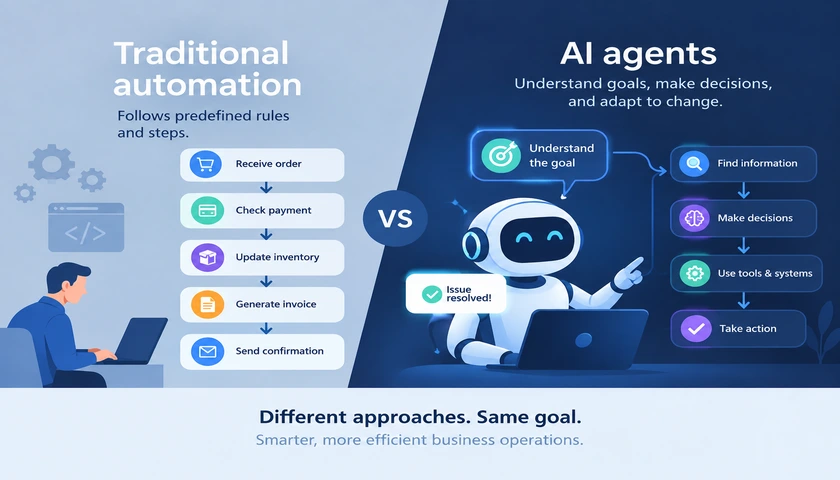
Traditional chatbots follow predefined rules and conversation flows. Modern AI-powered chatbots use natural language processing (NLP) and large language models (LLMs) to understand questions and generate contextually relevant responses.
AI chatbots can be integrated into websites, mobile applications, customer relationship management systems, and enterprise platforms.
Businesses commonly use them for customer support, lead generation, appointment assistance, product recommendations, and internal knowledge management.
The capabilities of a chatbot directly influence its development cost.
AI chatbot development cost by type
Different chatbot technologies require different levels of development effort.
1. Rule-based chatbot
Estimated cost: $3,000–$8,000
Rule-based chatbots operate through predefined questions, responses, and decision trees.
They are suitable for businesses that need simple conversational workflows without advanced AI capabilities.
Common features include:
- Frequently asked question responses
- Basic customer enquiries
- Contact information collection
- Menu-based navigation
- Simple appointment enquiries
These chatbots are generally easier to develop and maintain because they do not require complex AI models.
However, their ability to handle unexpected questions is limited.
2. AI-powered conversational chatbot
Estimated cost: $8,000–$20,000
AI-powered chatbots use language models to understand user intent and generate natural responses.
Unlike rule-based systems, they can handle different question formats and maintain conversation context.
Typical capabilities include natural language understanding, multilingual responses, conversational assistance, and basic knowledge retrieval.
These solutions are suitable for businesses seeking more flexible customer interactions.
3. Custom AI chatbot with business integrations
Estimated cost: $15,000–$40,000
Custom AI chatbots connect with existing business systems to provide more personalized and useful responses.
For example, a chatbot integrated with a CRM can retrieve authorized customer information, while an e-commerce chatbot can provide order updates.
Common integrations include:
- CRM platforms
- ERP systems
- E-commerce applications
- Customer support software
- Appointment scheduling systems
- Business databases
Integration complexity, authentication requirements, and data access controls significantly affect development costs.
4. Advanced AI chatbot with RAG
Estimated cost: $20,000–$60,000
Retrieval-augmented generation (RAG) allows AI chatbots to retrieve relevant information from approved business documents and knowledge sources.
Instead of relying only on general model knowledge, the chatbot can use information from company policies, product documentation, knowledge bases, and internal records.
This approach is useful for businesses that require responses grounded in organization-specific information.
Development may involve document processing, embedding generation, vector search, retrieval pipelines, and response evaluation.
The cost increases when the system must handle large document collections, complex access permissions, or frequently changing information.
5. Enterprise AI chatbot
Estimated cost: $40,000–$100,000+
Enterprise chatbots support complex business requirements across departments, applications, and user groups.
These systems may include advanced security controls, multilingual capabilities, multiple communication channels, workflow automation, analytics, and human support escalation.
Enterprise solutions also require extensive testing, performance monitoring, and ongoing maintenance.
The final cost depends on the scale and complexity of the organization’s requirements.
Key factors affecting AI chatbot development costs
Several technical and business factors determine the total investment required to build an AI chatbot.
Chatbot features and complexity
A chatbot that answers basic questions requires less development effort than one that manages conversations, retrieves business information, and performs actions.
Advanced capabilities such as voice interaction, multilingual support, personalization, and workflow automation increase development complexity.
AI model selection
The selected AI model affects response quality, processing speed, and operating expenses.
Businesses can use commercial AI APIs or deploy suitable open-source models depending on their requirements.
Model selection should consider performance, cost, privacy, and infrastructure needs.
Third-party integrations
Connecting a chatbot with CRM, ERP, payment, or customer support platforms requires additional development and testing.
Complex integrations may involve custom APIs, data synchronization, and user authentication.
User interface design
A simple website chat widget is generally less expensive than a fully customized conversational interface.
Additional features such as voice input, file uploads, conversation history, and mobile optimization can increase development costs.
Data preparation
AI chatbots connected to business knowledge bases require accurate and well-organized information.
Preparing documents, removing outdated content, and establishing access permissions can require significant effort.
Security and compliance
Chatbots handling sensitive information may require encryption, authentication, audit logging, and additional security testing.
Organizations operating in regulated industries may also need industry-specific compliance measures.
ChatGPT API integration cost in 2026
Businesses developing AI chatbots often use existing language models through APIs rather than building their own models from scratch.
ChatGPT-powered integrations can support natural conversations, document assistance, customer support, and internal knowledge retrieval.
API expenses are typically based on the selected model and the number of input and output tokens processed.
For example, a chatbot receiving thousands of customer questions each month will generate ongoing usage costs based on conversation length, model selection, and any additional tools.
The total API cost depends on:
- Number of conversations
- Average message length
- Selected AI model
- Conversation history and context size
- Knowledge retrieval requirements
- Additional API tools and services
Important: API usage charges are separate from chatbot development costs.
Businesses should estimate expected usage and monitor consumption after deployment to maintain predictable operating expenses.
AI chatbot development costs by industry
Different industries require different chatbot capabilities.
The following examples illustrate how business requirements influence development complexity.
E-commerce
E-commerce chatbots can assist with product discovery, order tracking, return policies, and customer enquiries.
Basic product assistance is relatively straightforward, while personalized recommendations and live order integrations require additional development.
Healthcare
Healthcare chatbots can support appointment enquiries, administrative assistance, and access to approved patient information.
Applications handling sensitive health information require stronger privacy protections and appropriate safeguards.
Banking and finance
Financial chatbots can answer general service questions, explain products, and help customers navigate account-related processes.
Secure authentication, access controls, and regulatory requirements can increase implementation costs.
Real estate
Real estate chatbots can answer property enquiries, collect lead information, and assist with scheduling property visits.
CRM integration and personalized property recommendations may require additional development.
Education
Educational institutions can use AI chatbots to answer admission questions, explain courses, and assist students with administrative information.
Advanced learning assistants may require customized knowledge sources and additional evaluation.
Hidden costs of AI chatbot development
The initial development budget is only one part of the total investment.
Businesses should also consider ongoing expenses.
| Expense | What it covers |
|---|---|
| AI API usage | Model requests and token consumption |
| Cloud hosting | Application servers and infrastructure |
| Database services | Conversation records and business information |
| Knowledge retrieval | Vector storage, indexing, and search |
| Maintenance | Bug fixes and technical improvements |
| Security | Monitoring, updates, and access controls |
| Analytics | Conversation tracking and performance evaluation |
| Support | Technical assistance and operational management |
These expenses vary according to chatbot usage and infrastructure requirements.
Planning for recurring costs helps businesses avoid unexpected operational expenses after deployment.
Custom AI chatbot development vs. ready-made chatbot platforms
Businesses can choose between building a custom AI chatbot and using an existing chatbot platform.
Both approaches have advantages depending on business requirements.
| Factor | Custom AI chatbot | Ready-made chatbot platform |
|---|---|---|
| Initial cost | Generally higher | Generally lower |
| Customization | Extensive | Limited by platform |
| Deployment time | Usually longer | Usually faster |
| Integrations | Custom integrations possible | Depends on supported integrations |
| Scalability | Designed around business needs | Depends on platform capabilities |
| Maintenance | Business or development partner | Often managed by provider |
| Long-term flexibility | Greater architectural control | Depends on vendor |
When should you choose a ready-made chatbot?
Ready-made platforms are suitable for businesses that need standard customer support automation, simple lead collection, or basic conversational features.
They can reduce initial development effort and support faster deployment.
When should you choose custom AI chatbot development?
Custom development is suitable when businesses require specialized workflows, complex integrations, unique interfaces, or greater control over data and application architecture.
Although custom solutions may require a larger initial investment, they offer flexibility for evolving business requirements.
How long does it take to develop an AI chatbot?
Development timelines depend on the chatbot’s features, integrations, and technical complexity.
| Chatbot type | Estimated development timeline |
|---|---|
| Basic rule-based chatbot | 2–4 weeks |
| AI-powered chatbot | 4–8 weeks |
| Custom chatbot with integrations | 8–12 weeks |
| Advanced RAG chatbot | 10–16 weeks |
| Enterprise AI chatbot | 4–8 months or more |
These are approximate planning timelines rather than guaranteed delivery schedules.
Projects requiring complex integrations, extensive security testing, or large-scale data preparation may take longer.
A phased development approach can help businesses launch essential capabilities first and introduce advanced features later.
How to reduce AI chatbot development costs
Businesses can control chatbot development expenses without sacrificing essential functionality.
1. Start with clearly defined requirements
Identify the main business problem before development begins.
Avoid adding unnecessary features that do not contribute to measurable outcomes.
2. Build a minimum viable product
Start with an MVP that includes essential chatbot capabilities.
This allows businesses to evaluate user feedback before investing in additional functionality.
3. Use existing AI models
Using established AI APIs can reduce the cost and complexity of developing AI capabilities from scratch.
4. Prioritize important integrations
Connect the chatbot with essential business systems first.
Additional integrations can be introduced as requirements evolve.
5. Optimize AI usage
Choose models according to task complexity and monitor token consumption.
Efficient prompts, appropriate context management, and caching can help reduce recurring costs.
6. Consider offshore development
Working with an experienced offshore development team can provide access to technical expertise while helping businesses manage development budgets.
However, vendor selection should consider experience, communication, security practices, and delivery quality rather than hourly rates alone.
7. Plan ongoing maintenance
Regular monitoring and updates help identify issues early and prevent expensive improvements later.
How to calculate AI chatbot development ROI
Before investing in chatbot development, businesses should estimate the potential return on investment.
Start by identifying measurable improvements such as reduced support workload, faster response times, and improved lead handling.
For example, consider a business that receives 10,000 customer enquiries per month.
If an AI chatbot successfully handles 40% of those enquiries without human intervention, it could reduce manual handling for approximately 4,000 conversations.
However, actual savings depend on support costs, chatbot accuracy, escalation rates, and ongoing operating expenses.
A simple ROI calculation is:
ROI (%) = [(Financial benefits − Total costs) ÷ Total costs] × 100
Total costs should include initial development and recurring expenses over the measurement period.
Businesses should evaluate chatbot performance using real operational data rather than assuming every automated conversation produces a direct financial saving.
Is investing in an AI chatbot worth it in 2026?
AI chatbot development can be a valuable investment for businesses managing repetitive enquiries, large information volumes, or time-consuming customer interactions.
The strongest results usually come from selecting a specific business problem and building a chatbot around measurable objectives.
For example, customer support teams may benefit from faster enquiry handling, while sales teams may use conversational AI to improve lead qualification.
However, not every business needs an advanced AI chatbot.
Organizations with simple requirements may find that a rule-based chatbot or ready-made platform provides sufficient functionality.
The right investment depends on business goals, expected usage, integration requirements, and long-term scalability.
Frequently asked questions
What is the minimum budget required to develop an AI chatbot?
A basic custom chatbot may start at approximately $3,000, depending on its features and development scope. More advanced AI-powered solutions generally require larger budgets.
Is it cheaper to build an AI chatbot using an API?
Using an existing AI API can reduce the need to develop and host a language model. However, businesses still need to budget for application development, integrations, security, and ongoing API usage.
How much does it cost to maintain an AI chatbot?
Maintenance costs depend on infrastructure, model usage, integrations, monitoring, and support requirements. Businesses should request a separate estimate for recurring operating expenses.
Can an AI chatbot be added to an existing website?
Yes. AI chatbots can be integrated into existing websites through chat interfaces and backend APIs. The development effort depends on the website’s technology and required functionality.
Does an AI chatbot need a dedicated server?
Not always. Many chatbots use cloud-hosted applications and external AI APIs. Dedicated infrastructure may be necessary for specific performance, privacy, or deployment requirements.
Can a business upgrade a basic chatbot later?
Yes. A well-designed chatbot can be expanded with additional features such as multilingual support, CRM integrations, knowledge retrieval, and workflow automation.
How can businesses avoid unexpected chatbot development costs?
Define the project scope, request detailed estimates, identify third-party charges, and plan for maintenance before development begins. A phased implementation can also help control expenses.
What should businesses look for in an AI chatbot development company?
Evaluate technical expertise, relevant project experience, security practices, integration capabilities, communication, and post-launch support. A reliable development partner should provide a clear implementation plan and transparent cost estimates.
Conclusion
AI chatbot development costs in 2026 vary significantly depending on chatbot complexity, integrations, AI capabilities, and business requirements.
While basic chatbots can be developed with relatively modest budgets, advanced enterprise solutions require greater investment in architecture, security, testing, and maintenance.
Businesses should focus on choosing the right features, estimating ongoing expenses, and identifying measurable business outcomes.
A carefully planned chatbot project can improve customer experiences, streamline operations, and create opportunities for long-term efficiency.
Planning to build an AI chatbot for your business?
Turn your chatbot idea into a practical AI solution. From customer support automation to custom conversational assistants, build scalable applications that simplify operations and improve customer engagement.